From Riccardo Klinger comes an interesting demo workflow bridging open and proprietary GIS enviroments. In his article, Riccardo describes how to build an independent basemap pipeline creating vector tiles from OSM1 street network data (using a small memory footprint thanks to GDAL2 and OGR3), and how to integrate the resulting basemap into an Esri ecosystem.
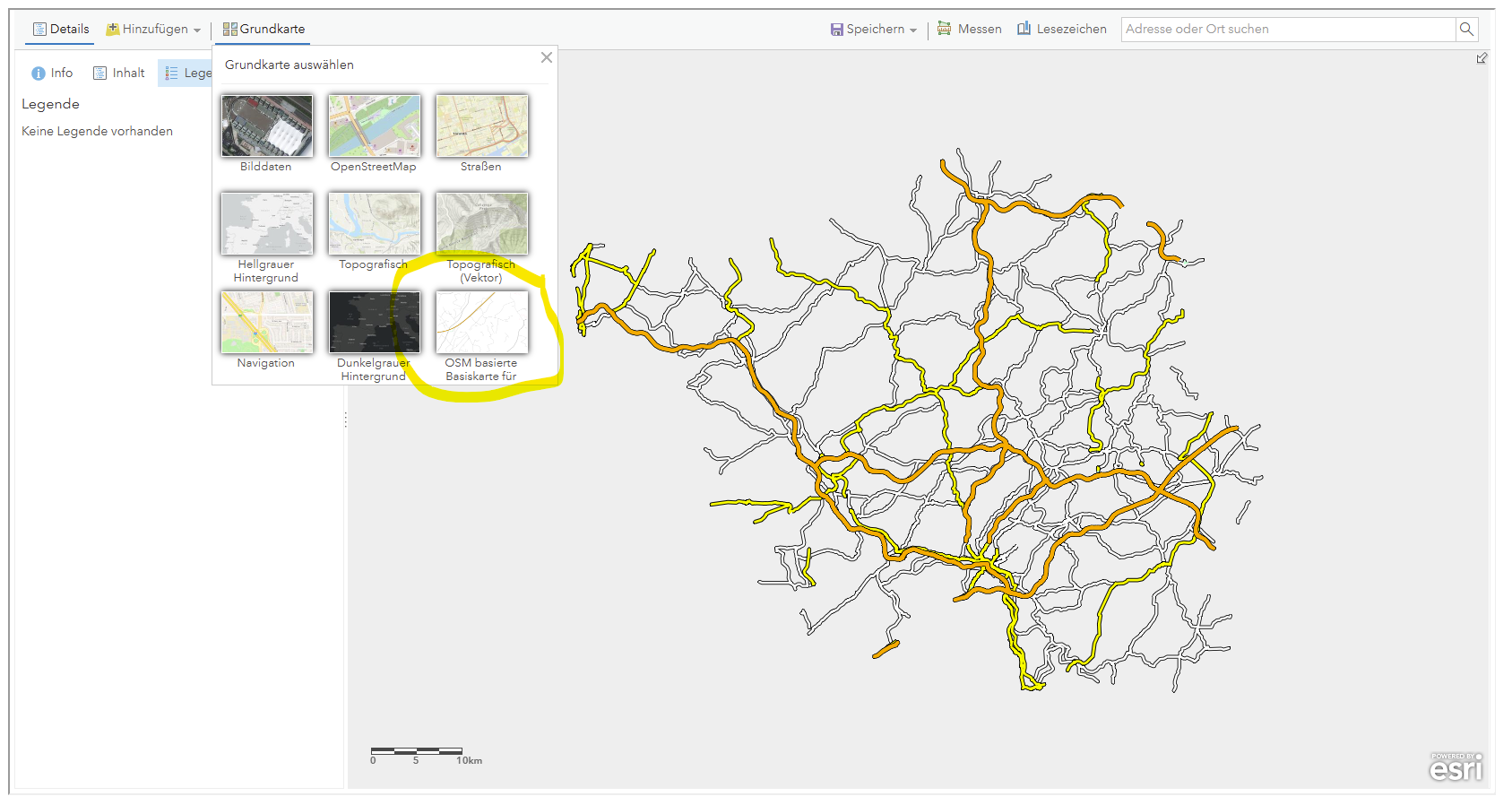
Riccardo demonstrates an approach that allows users to leverage the rich data from OSM while maintaining the flexibility and performance of vector tiles in their Esri applications. It is not that often that we see such a seamless integration of open-source tools with proprietary GIS technology. In Riccardo’s words:
This makes GDAL something of a quiet bridge between two worlds. In this pipeline:
- ArcGIS tools handle geodatabase management, cartography, and tile generation
- GDAL/OGR provides flexible access to OpenStreetMap data
Rather than representing competing ecosystems, these technologies complement each other and enable data to move smoothly between open data communities and enterprise GIS platforms.
The article has all the technical details, and analyses also the broader implications.
Footnotes
OpenStreetMap, a collaborative, open-licensed map of the world.↩︎
GDAL (Geospatial Data Abstraction Library) is an open-source library and set of command-line tools for reading, writing, and transforming raster and vector geospatial data formats.↩︎
OGR is the vector data library within GDAL supporting a wide range of vector formats.↩︎